


The UNIC website uses cookies to improve your experience. Read our full Cookie Policy here.
09/02/2026 13:00 - 11/02/2026 14:00
Register / RSVP : https://forms.gle/qVFeKnRtEu59eRkL6
This CityLabs Lightning Bites series features short, impactful talks from diverse perspectives, addressing the critical challenges and opportunities in promoting accessibility and inclusion practices.
Superdiversity represents the contemporary reality of urban life, characterized by an exponential increase in variety across ethnicity, language, migration status, and religion. Globally, there is growing recognition and interest in how this phenomenon fundamentally reconfigures the social, economic, and political landscape of our post-industrial cities.
In this Lightning Bites series, we explore how superdiversity shapes cities and citizens, fostering new forms of urban innovation, social cohesion, and cultural transformation. The aim of this series is to consider how the inherent complexity of superdiversity disrupts simplistic, monolithic narratives about migration, identity, and integration. It serves as a lens to challenge dominant frameworks, expose structural inequalities, and foster a more nuanced and inclusive understanding of belonging in the modern global city.
SESSIONS:
Monday 9th
1) 13:00 - 13:30 : "Everyday Racism and Discrimination in Public Space: Chinese International Students and the Second- and Third-Generation Chinese in Milan and Brussels" by Masako Nemoto, University of Liège
Despite growing discussions on racism and discrimination in Europe, the everyday experiences of Chinese immigrants remain overlooked, particularly in relation to safety in public space and the role of race and ethnicity. This research examines how Chinese immigrants in Milan and Brussels, both Chinese international students and second- and third-generation Chinese students, encounter, interpret, and respond to everyday racism and discrimination in public space.In this presentation, Masako Nemoto will introduce:
a) The key theories applied in her research, including Everyday Racism (Essed, 1991), Intersectionality (Crenshaw, 1989), and the concept of Public Space (mainly used Lefebvre, 1991), and
b) The main findings from the Milan case studies, based on both individual interviews and focus group discussions.
2) 13:30 - 14:00 : "Superdiversity in Łódź: Challenges and Practices for Strengthening Dialogue in a Post-Industrial City" by Eliza Gaust, University of Łódź
Łódź, as a post-industrial Polish city, is experiencing growing superdiversity driven by migration and socio-economic change. The recent arrival of new groups, including refugees from Ukraine and Belarus, has increased cultural dynamism but also heightened social tensions, visible in anti-refugee marches organized by radical right-wing groups.
In response, local actors have developed initiatives that foster inclusion and counter polarization—such as the “Łódź for All” walk, the Łódź of Diversity Coalition, and public dialogues inspired by the Nansen Center for Peace and Dialogue. These practices show how collective events, coalition-building, and structured dialogue can reduce tensions and strengthen social cohesion in diverse urban communities.
Tuesday 10th
1) 13:00 - 13:30 : "ICONIC project" by Mark van Ostaijen, Erasmus University Rotterdam
Mark will talk about his granted research, Project Iconic (https://project-iconic.eu/). For this international comparative research, he focusses, with a team of PhDs, on the decision-making of ‘street-level workers’. More specifically he zooms in on how they legitimate decisions in superdiverse European neighbourhoods of Malmö, Aarhus, Rotterdam, Antwerp, Marseille and Bilbao.
In this talk he will reflect on the UNIC character of this project, how the project currently started and what can be expected in the nearby future. This makes this project the first major comparative study on the institutional consequences of superdiversity, which will ultimately provide insights into how urban diversity becomes translated into policy practices.
2) 13:30 - 14:00 : "Promoting professional conduct – anti-discrimination policies in a superdivers workforce" by Catherine Gregori, City of Bochum
Using the municipal administration of Bochum as an example, Catherine Gregori focuses on the role of anti-discrimination policies in creating non-discriminatory employment relations in a superdiverse workplace. Since overall discrimination rates are highest in the workplace, the housing market, and the civil service, this also has implications for the superdiverse society in general.
Wednesday 11th
1) 13:00 - 13:30 : "Building Gender Equality at ULiège: Challenges & Perspectives" by Bastien Bomans and Caroline Glorie, University of Liège
Since its creation in October 2022, the Gender & Equality Advisory Board (GEAB) of the University of Liège has been pursuing gender equality, promoting the inclusion of minority, groups while promoting the opposition against any form of discrimination. Far from occluding or muting such realities, the GEAB’s initiatives reflect the recognition that the university, as a microcosm of society, is not immune to power imbalances, inequalities or instances of violence.
This presentation intends to highlight how the GEAB – as a participatory group that promotes bottom-up dynamics in the implementations of EDI policies – is one institutional example that engages with the concept of ‘equality’ in a broad sense, but that also responds to specific needs. After introducing the origins of the GEAB, Bastien and Caroline will not only foreground three concrete past initiatives (i.e. tools against sexual and moral harassment; the Charter of Ethics; the feminization of university spaces), but they will also emphasize the GEAB’s continuing work... and work to come.
2) 13:30 - 14:00 : "Religious diversity in the city" by Gorka Urrutia, University of Deusto
Coexistence between people and groups of different religious affiliation or without religious identification continues to be a socially relevant element today. Our cities and towns today house a growing diversity of identities and social or cultural groups. Among them, those of religious or philosophical inspiration play a very important role in the lives of many people and maintain formal or informal relationships with both institutions and public space considered in a broad sense.
Regional and local institutions, being the closest to citizens, are faced with the need to manage growing demands for accommodation for religious reasons or the responses to such accommodations by other social groups. In the local space, actors and dynamics converge, which in a constant relationship condition the enjoyment of rights and the social and neighbourhood climate.
The presentation will focus in some of these issues with regards to the Spanish case.
Register / RSVP : https://forms.gle/qVFeKnRtEu59eRkL6
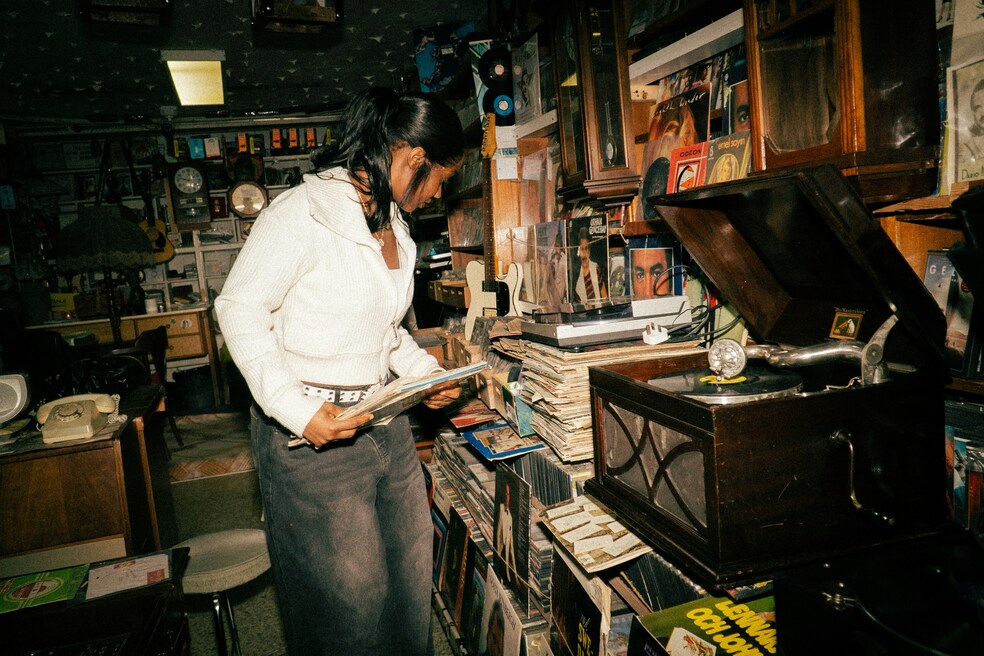
CityLab: Music communities in a post-industrial city
Erasmus University and UNIC CityLab invite you to an afternoon exploring music communities in ...
29 Oct 2026 - 29 Oct 2026
Read more »
Intensive Methods Training in Migration and Superdiversity
Postgraduate Course | Online lecture series and optional in-person event within Thematic Line ...
15 Oct 2026 - 28 Jan 2027
Read more »
UNIC Series of Open Entrepreneurship Courses 2026/2027
Expand your Entrepreneurship horizon through open online courses across UNIC universities with...
01 Oct 2026 - 31 May 2027
Read more »